
The Backbone Platform for Appliance Repair

Run your repair business on a platform that never puts a customer on hold.

New Horizon Diagnostics gives your company an AI agent that handles intake, diagnosis, scheduling, parts and billing — while your team stays in control of every decision that matters.

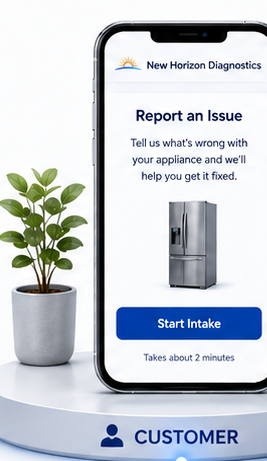
Mobile screen prompting a customer to start reporting an appliance issue

A customer calls or texts — no app to install, no account to create.

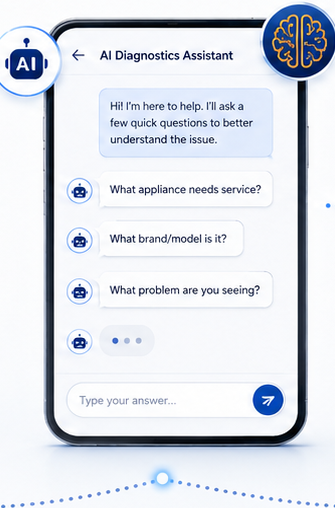
AI diagnostics assistant chat asking guided questions about the appliance

The AI agent diagnoses the issue live on the call and lists the parts required.

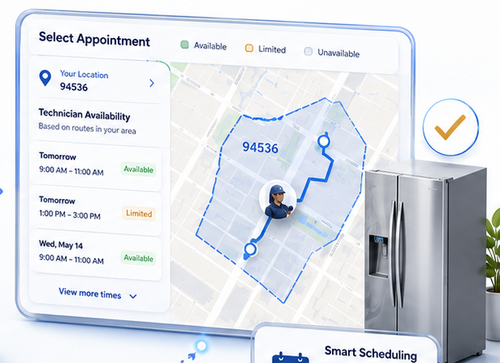
Appointment selection screen showing technician availability on a coverage map

A visit is booked on the spot, matched to real technician coverage and capacity.

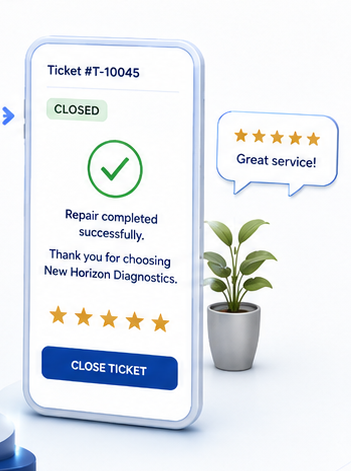
Mobile screen confirming a repair ticket is closed after successful completion

Your technician repairs, bills the job, and the ticket closes itself once payment clears.

1 conversation Zero customer logins, ever
Human-reviewed By default, on every diagnosis
Multi-tenant Your pricing and rules, one shared engine
Fully audited Every status change — who, what, when

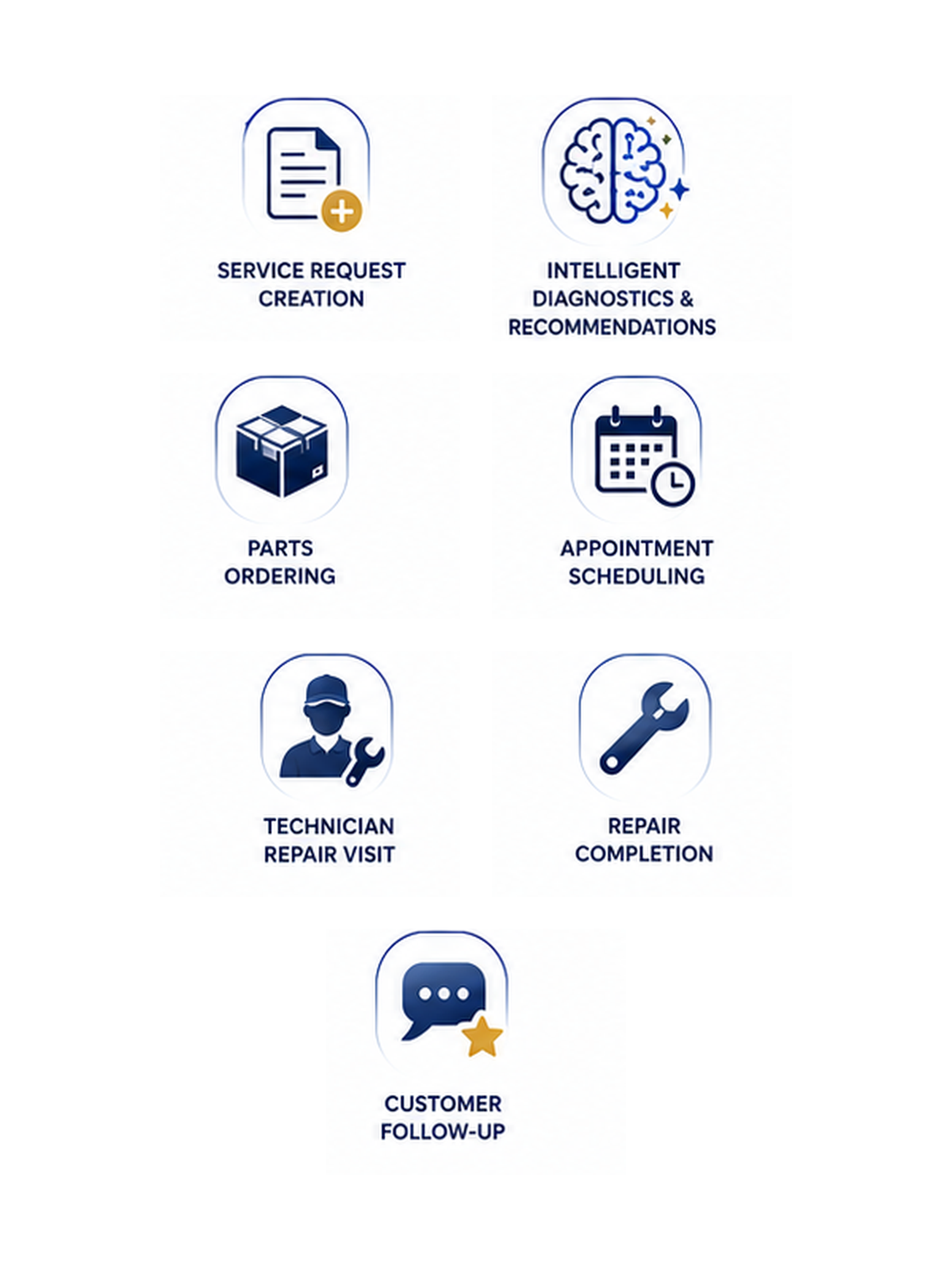
Running a repair company means juggling seven jobs at once.

Phones ringing with new complaints. Technicians who need a schedule that actually holds. Parts that have to arrive before a truck rolls. Warranty claims that have to be filed correctly. Paperwork that has to survive an audit. Most shops stitch this together from spreadsheets, phone trees and whatever software came bundled with the last system.

New Horizon Diagnostics replaces the stitching. One backbone platform runs intake, diagnosis, scheduling, parts and billing for you — your team stays in charge of every judgment call, the platform stays in charge of every repetitive step.

Icons for the seven jobs the platform runs at once: service request creation, AI diagnostics, parts ordering, appointment scheduling, technician visit, repair completion and customer follow-up

AI-first, human-decided

The AI answers the phone. Your people make the call.

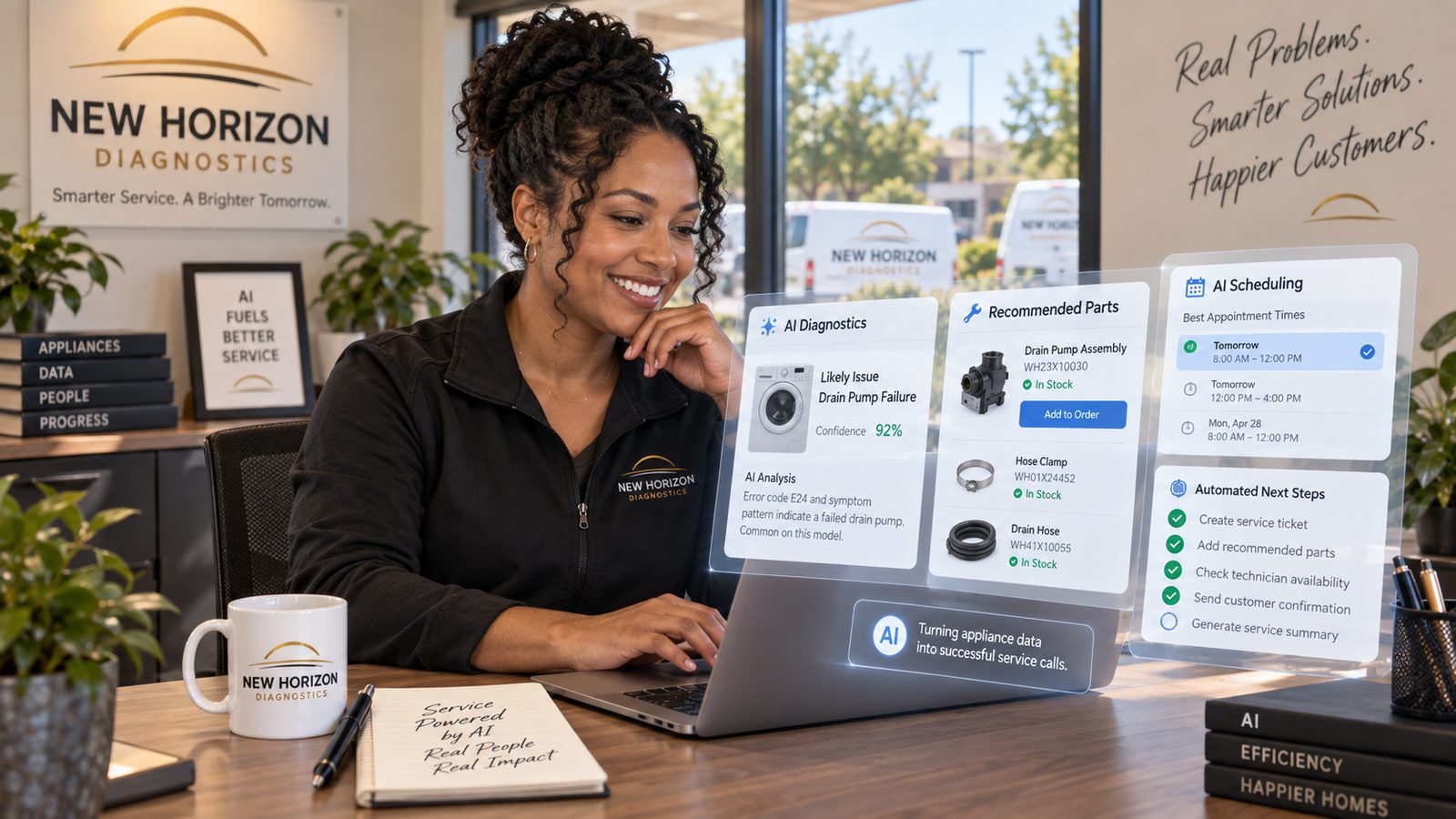
Intake, root cause, the parts list and an appointment are all on screen before the customer hangs up — the AI diagnoses during the conversation, because that is the only moment it can still ask a follow-up question.

What comes out of that conversation is a recommendation, not a decision. Your review rules decide what needs a specialist's sign-off, and anything the rules don't cover is reviewed by default.

A service coordinator at an appliance repair company running on New Horizon Diagnostics, reviewing an AI diagnosis, the recommended parts and the best appointment times for a customer still on the call
One conversation produces the diagnosis, the parts and the appointment — and a record of who approved each one.

Your people. Your customers. One platform.

NHD is the platform your repair company runs on, not the company doing the repairs. It automates the repetitive steps of a job — never the judgment calls. Every decision that matters stays with your own staff, and the platform records exactly who made it.

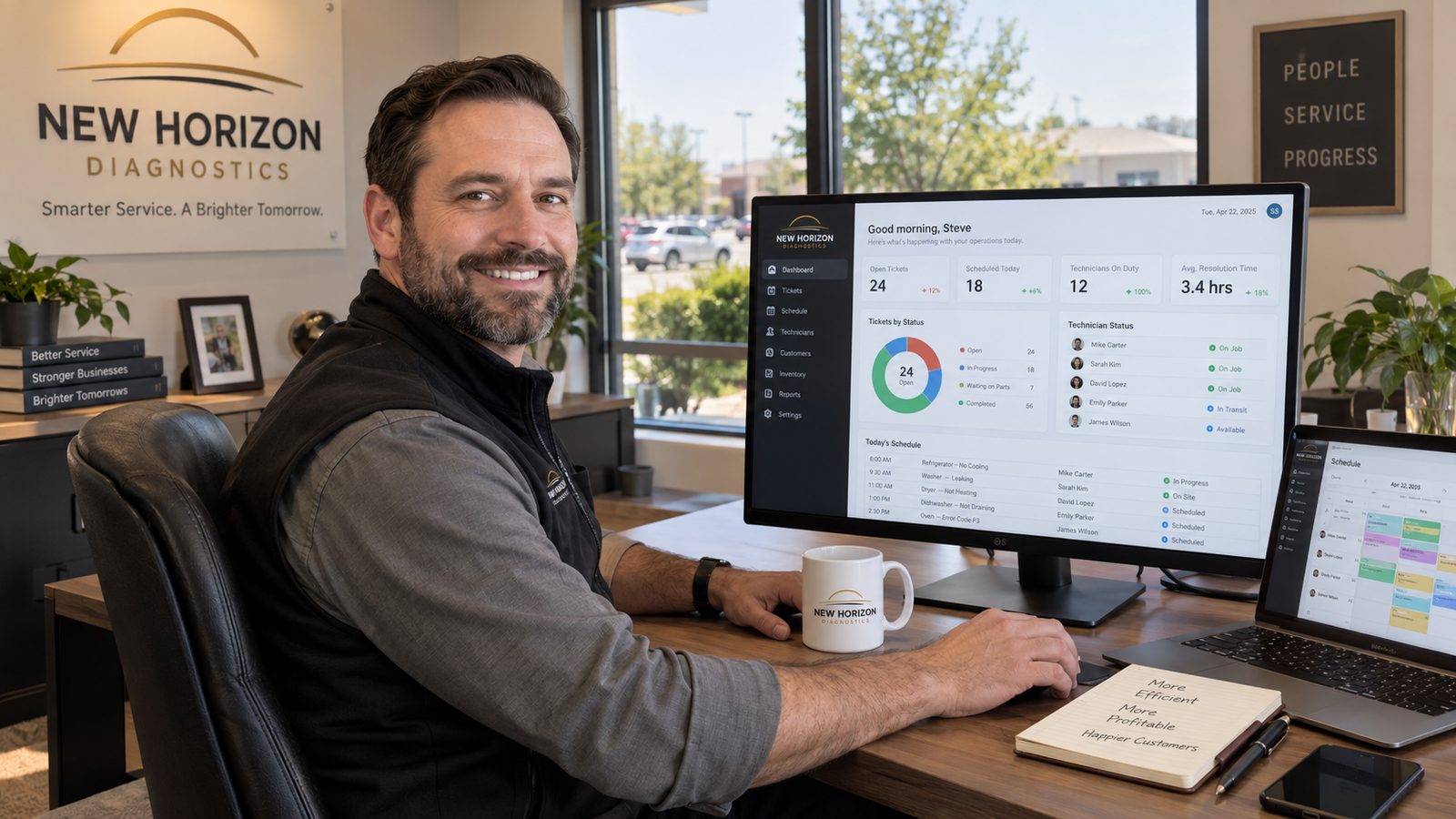
A repair company owner at his desk reviewing open tickets, technician status and the day's schedule on the NHD operations dashboard

You, the owner & administrator

You see the whole floor

Your pricing, your review rules, your triage targets and your own technician coverage — configured for your company alone on the shared engine. Then open tickets, technician status and the day's schedule sit on one screen instead of five.
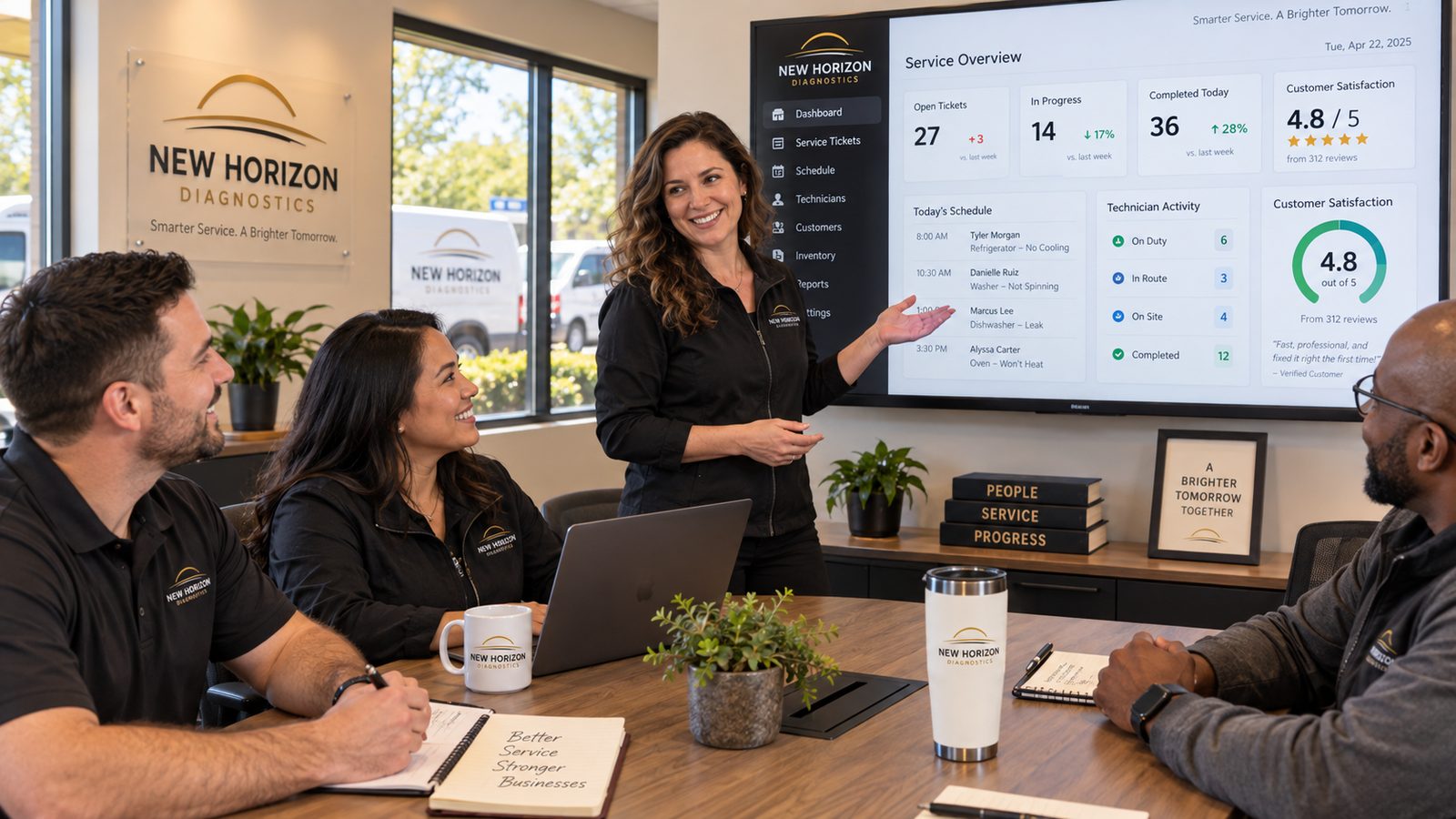
Four support specialists at an appliance repair company reviewing the day's service overview together on a wall display

Your support specialists — the triage team

Your triage team has the final word

Your specialists approve, amend or replace an AI diagnosis and its parts list — rejecting one means writing the right answer, not asking the model to try again. Every exception in the workflow lands in one pull queue any specialist can claim, so nothing waits behind one person.

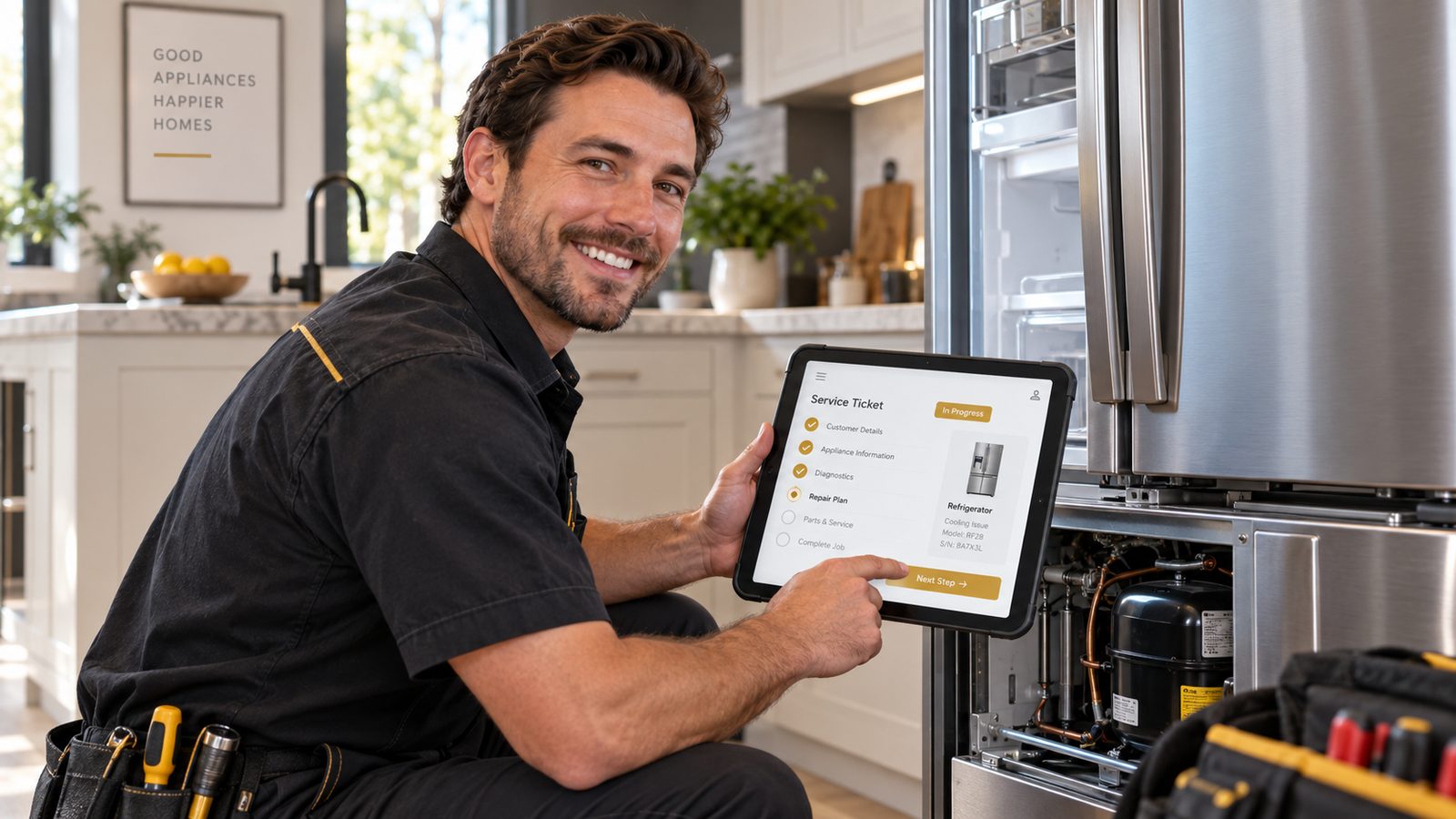
A technician kneeling at an open refrigerator in a customer's kitchen, working through the service ticket on a tablet

Your technicians

One technician, one visit, every step recorded

Your technicians see only their own appointments. On site they photograph the appliance tag before the job can close, confirm which parts were actually fitted, and take card payment on jobs no warranty covers — all on the same ticket the AI opened.

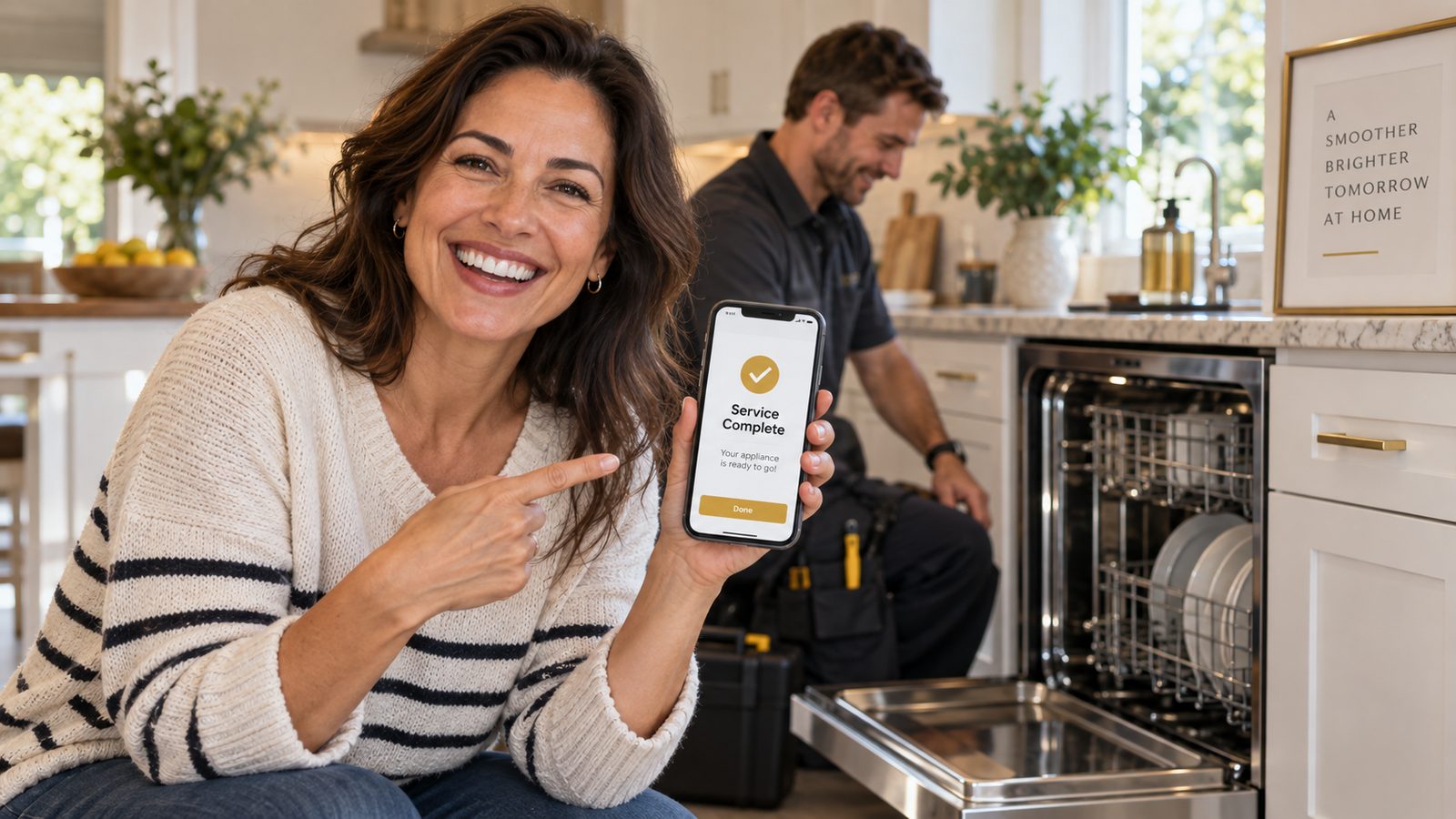
A homeowner in her kitchen holding up a service-complete confirmation on her phone while the technician finishes the job behind her

Your customers

Your customer never logs in

No app, no account, no portal — your customers reach you in one conversation, by phone or by text. A message goes out whenever a promise changes: appointment confirmed, rescheduled, technician on the way. The ticket closes itself once the repair is settled.

Everything the job needs, built in

AI diagnostics assistant chat asking a customer guided intake questions

AI-First Intake

Customers call or text your own number and are never asked to log in — the AI agent captures every detail of the job in one conversation.

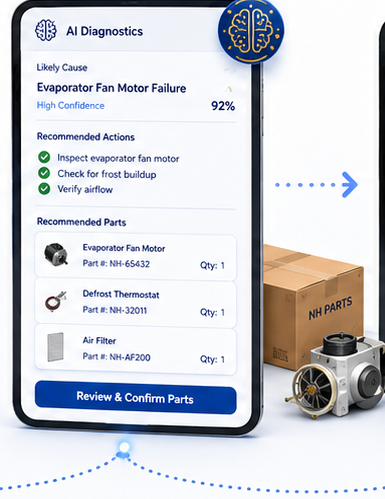
AI diagnosis screen showing a likely root cause with a confidence score and recommended parts

Human-Reviewed Diagnosis

Diagnoses are produced live on the call, but your review rules decide what needs a specialist's sign-off — and anything the rules don't cover is reviewed by default.

Appointment scheduling screen showing technician coverage by zip code on a map

Smart Scheduling

Availability is computed from your own technicians' real coverage — company, zip code, day and time window — and booked with the customer while they're still on the line.

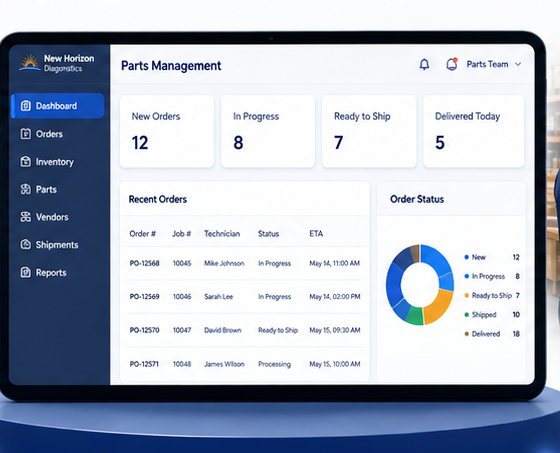
Parts management dashboard showing order status and estimated arrival times

Automated Parts Procurement

Parts are sourced from stock or a supplier automatically, and a job whose parts won't arrive in time is rescheduled before it becomes a wasted truck roll.

Mobile screen showing a repair ticket marked closed after a successful repair

Integrated Billing & Warranty

Charges and payments are tracked as two ledgers, warranty claims draft themselves the moment a job resolves, and a ticket closes only once the money actually clears.

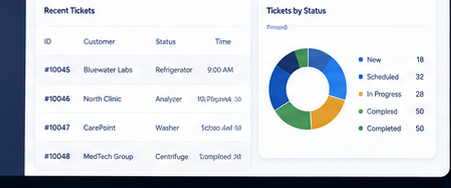
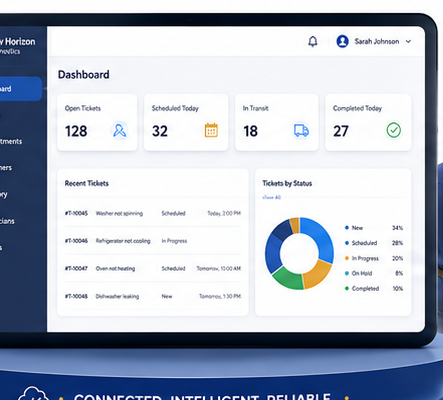
Dashboard panel listing recent tickets alongside a breakdown of tickets by status

One Triage Queue

Every exception across the whole workflow — a missed photo, a stalled review, a contact escalation — lands in a single pull queue with its own service target. Nothing waits on one person.

Central operations dashboard showing open tickets, scheduled visits and completion metrics

Multi-Tenant Backbone

One platform runs every repair company that uses it, each with its own pricing and operating rules, while customers, appliances and technicians can be shared between those companies where it makes sense.

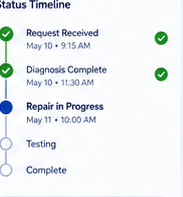
Status timeline showing each stage of a repair recorded with a timestamp

Full Audit Trail

Every status change on every ticket and repair cycle is recorded — who changed it, from what, to what, when and why — so nothing is ever taken on faith.

From first call to closed ticket

  1. 1

    Customer calls or texts

    The AI agent answers on your own number, captures the appliance, the problem and every contact detail — no portal, no login.

  2. 2

    AI diagnoses & books

    A root cause and parts list are produced on the call, an estimate is given where one applies, and a preliminary appointment is set immediately.

  3. 3

    Parts & schedule confirm

    Parts are sourced and ordered; once every line is in hand, the appointment is confirmed by text — or rescheduled automatically if parts run late.

  4. 4

    Technician completes & bills

    Your technician repairs the appliance, collects payment or files the warranty claim, and the ticket closes itself once the money is in.

Frequently asked questions

What is appliance repair workflow automation?

It is running intake, diagnosis, scheduling, parts procurement and billing as one connected workflow instead of separate spreadsheets, phone trees and disconnected tools. New Horizon Diagnostics automates the repetitive steps of a repair job end to end, while every judgment call still belongs to a person.

Does an AI diagnose the appliance problem automatically?

Yes. The AI agent diagnoses the issue live on the customer's call and lists the parts likely required, so nothing waits on a callback. Configurable review rules then decide whether a specialist must approve, amend or replace that diagnosis before it drives an estimate or a repair — and any ticket the rules don't cover is reviewed by default.

Can the platform schedule technician appointments automatically?

Yes. Appointment availability is computed automatically from each technician's real coverage — company, zip code, day of week and time window — and a booking is offered and confirmed with the customer while they're still on the call, inside the company's own booking horizon.

Does NHD automate parts ordering and warranty claims?

Parts are sourced from stock or a supplier automatically once a diagnosis is approved, and a job whose parts won't arrive in time is rescheduled before it becomes a wasted truck roll. Warranty claims draft themselves the moment a covered repair resolves, and billing tracks charges and payments as two ledgers so a ticket closes only once the money actually clears.

Can one platform run more than one appliance repair company?

Yes. New Horizon Diagnostics is a multi-tenant backbone: each repair company keeps its own pricing, review rules and technician coverage, while a shared engine runs every company that uses it. Technicians, customers and appliances can be shared between companies where it makes sense.

Is every status change on a repair ticket audited?

Yes. Every status change on every ticket and repair cycle is recorded — who changed it, from what, to what, when and why — so nothing about a job's history is ever taken on faith.

See NHD running your own workflow.

We'll walk through intake, diagnosis review, scheduling and billing using a scenario from your own business.

Request a Demo